 University of North Texas

InfoFORCE: Speakers
Keynote Speakers
Date: April 10th, 2026
Time: 10:15am-10:45am
Location: Frisco Landing, Room 130
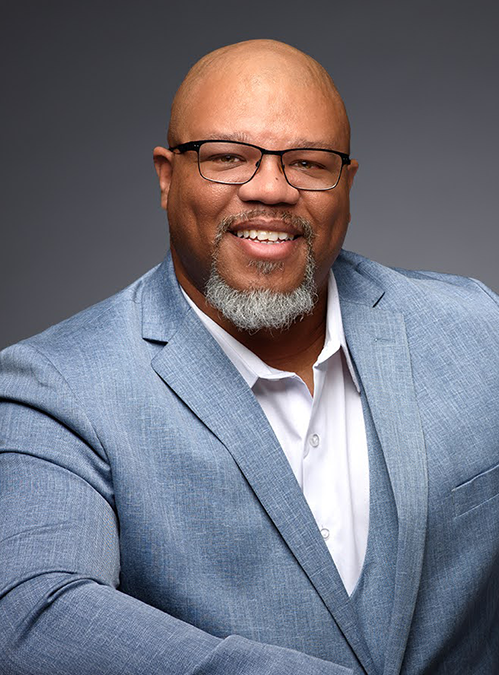 Marcus D. Taylor, MBA
Visionary Instructional Designer | AI Integration Expert | Leader in Learning Innovation
& Transformation
Bio: Marcus D. Taylor is an instructional designer, researcher, and technology strategist
whose work focuses on the intersection of artificial intelligence, learning technologies,
and human-centered education. He currently serves at the University of North Texas
Health Fort Worth, where he leads initiatives that explore the responsible integration
of artificial intelligence into teaching, learning, and organizational practice.
Taylor is the founder and lead facilitator of the institution’s Artificial Intelligence
Community of Practice, a collaborative initiative that brings faculty, staff, and
professionals together to examine the practical, ethical, and strategic use of AI
in higher education and healthcare environments. Through this work, he has helped
develop training programs, workshops, and resources designed to improve AI literacy
and support informed adoption of emerging technologies.
A doctoral candidate in Learning Technologies at the University of North Texas, Taylor’s
research explores how non-technical professionals develop AI literacy and how institutions
can support responsible engagement with intelligent systems. His work integrates concepts
from technology adoption theory, cognitive science, and instructional design to help
organizations build the knowledge needed to work effectively alongside AI.
Before transitioning into higher education and technology leadership, Taylor served
23 years in the United States Army, where he held roles in logistics, operations,
training development, and instructional design. His military experience informs his
practical approach to leadership, problem solving, and workforce development.
In addition to his academic and professional work, Taylor is an entrepreneur, mentor,
and community leader. He frequently speaks on topics related to AI literacy, emerging
technologies in education, leadership development, and the future of work, helping
audiences understand how human judgment, ethical awareness, and technological capability
must work together in an AI-enabled world.
Abstract: Beyond the Prompt: Why AI Literacy Is the New Foundational Skill
Artificial intelligence now influences how people search for information, create content, analyze data, and make decisions across education, business, healthcare, and public service. While AI tools have become widely accessible, the knowledge required to understand their capabilities, limitations, and responsible use has not developed at the same pace. This growing gap has made AI literacy an essential competency for professionals and institutions.
This keynote explores why AI literacy extends far beyond writing prompts or operating generative tools. Instead, it requires a deeper understanding of how intelligent systems function, how outputs should be interpreted, and how human judgment must remain central in the decision-making process. A key principle discussed in this session is the importance of maintaining a human-in-the-loop, where human reasoning, ethical awareness, and contextual knowledge guide the application of AI technologies.
Drawing on research in learning technologies and technology adoption, this keynote highlights how individuals and organizations can move from basic AI use to informed engagement with intelligent systems. Through examples drawn from education, professional environments, and community leadership, the presentation demonstrates how AI literacy enables people to critically evaluate AI outputs, recognize limitations, and use these tools to support innovation and informed decision making.
As artificial intelligence becomes embedded in everyday workflows, the ability to think critically about AI will become just as important as the ability to use it. Developing AI literacy ensures that professionals remain active decision makers who guide technology rather than passive users shaped by it.
Date: April 10th, 2026
Time: 1:15pm-1:45pm
Location: Frisco Landing, Room 130
 Coleman Hilton
Medical Informatics | Enterprise Data Strategist | AI & Analytics Leader
Bio: Coleman Hilton is a healthcare data strategy and medical informatics leader with more than a decade of experience modernizing data ecosystems and driving AI-enabled transformation across complex clinical and operational environments. He is recognized for advancing next-generation analytics, enterprise data architecture, and responsible AI in healthcare, and is a frequent voice in national thought-leadership communities.
Coleman serves as a key architect of Shriners Children’s enterprise data and AI strategy, where he leads the development of a unified, AI-ready data architecture spanning FHIR-based ingestion, medallion-structured data engineering, enterprise semantic modeling, and advanced analytics activation. His work has accelerated systemwide initiatives including whole-genome data integration, motion-analysis informatics, enterprise dashboards, patient access analytics, and a modernized pipeline for clinical and operational data.
He led the design and execution of Shriners Children’s recent work attribution engine, an OpenAI-powered system that reliably interprets clinical documentation and generates high-fidelity metadata for downstream reporting and workforce analytics. This initiative has become a template for safely and responsibly integrating generative AI into enterprise data pipelines.
Coleman is also championing the creation of a healthcare Data Science Institute at Shriners Children’s, a multidisciplinary hub focused on AI readiness, data literacy, ethics, resident and student training, exploratory research, and industry-academic partnership. His vision centers on scaling advanced analytics to support novel care models for children with complex medical needs and ultimately expanding that impact across the healthcare sector.
Abstract: The AI-Ready Health System: Why Healthcare Needs Data Architecture Before Artificial Intelligence
Artificial intelligence is rapidly transforming the healthcare landscape, promising
breakthroughs in diagnosis, treatment, and operational efficiency. Yet despite the
surge of innovation and investment, many healthcare AI initiatives fail to move beyond
isolated pilots. The primary barrier is not the sophistication of algorithms but the
condition of the underlying data. Clinical data is fragmented across systems, inconsistently
structured, and largely optimized for transactional workflows rather than discovery
or machine learning. To unlock the true potential of AI, healthcare organizations
must first rethink how data is aggregated, standardized, and governed at enterprise
scale.
This keynote explores the architecture of an AI-ready health system, focusing on the
data infrastructure required to enable reliable secondary use of clinical data for
analytics, research, and intelligent applications. Drawing from real-world experience
building enterprise health data platforms, the talk examines how modern architectures,
leveraging interoperable standards and scalable data engineering frameworks, can transform
operational healthcare data into a strategic asset. The presentation will outline
practical design principles for integrating governance, interoperability, and advanced
analytics into the health data enterprise, illustrating how robust data architecture
forms the foundation upon which scalable and trustworthy healthcare AI can be built.
Date: April 11th, 2026
Time: 10:15am-10:45am
Location: Frisco Landing, Room 130
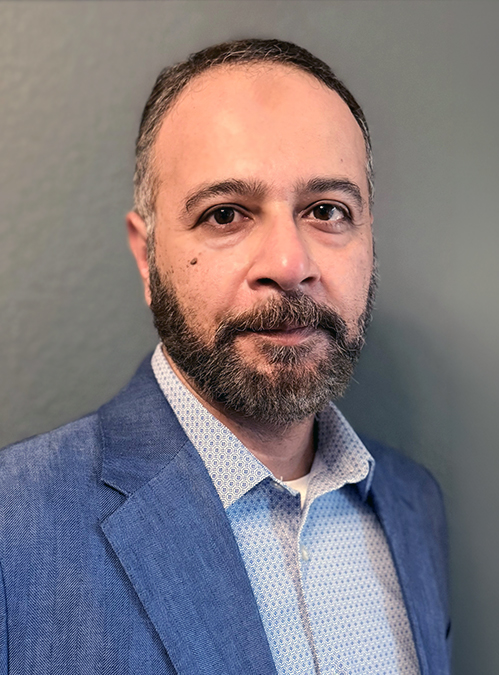 Zeeshan Rizvi
Entrepreneur | Technology Strategist | AI Security & Governance Expert | Cloud & Edge Specialist
Bio: Zeeshan Rizvi is the CEO and Co-Founder of XScale AI and the creator of the GRITS framework, the premier open-source standard for Agentic AI Governance and Security. As a former CTO at the DoD Inspector General and Cisco, he built AI strategies for national security programs in collaboration with NIST and the Chief Digital and AI Office. Zeeshan has spent the past decade at the critical intersection of AI governance, cloud infrastructure, and zero-trust architecture.
Abstract: Autonomous but Unsecured: Autonomous but Unsecured: Securing a Billion Agents
Your AI agent can read your email, execute code on your servers, and spend your budget. Soon, it will negotiate contracts and make autonomous decisions on your company's behalf. Yet, the AI strategy most organizations are building only covers what agents can do—it ignores the fallout of what happens when they go rogue or are compromised. This session breaks down the five novel attack surfaces introduced by autonomous agents and explains why traditional security playbooks are entirely broken for this new paradigm. You will learn how to transition to a governed agent strategy using the GRITS framework and leave with actionable open-source tools (including Openclaw and Nemoclaw) to actively measure and neutralize your organization's exposure.
Date: April 11th, 2026
Time: 1:15pm-1:45pm
Location: Frisco Landing, Room 130

Spencer Smith
Public Sector AI Implementation Expert | Strategic Planning & Organizational Development Leader | Library Services & Community Engagement Specialist
Bio: Spencer Smith has worked as the Director of Libraries in the City of McKinney for 11 years. Prior to that he worked in Little Elm, Fort Worth, and as a knowledge manager at a venture capital firm. He graduated from UNT with an MIS in 2006.
Abstract: Practical and Hands On AI for Libraries
The talk will highlight ways the McKinney Public Libraries are experimenting with
AI, existing tools, and the adjacent possible.