 University of North Texas

2026 COI Great Grads Spring
Hsin-Hsuan Chung

Ph.D. Information Science, Data Science
Hsin-Hsuan remembers her first day as a master’s student at UNT clearly. She sat alone
and cried, feeling like an outsider in both language and knowledge.
That distance—between the student she was on that first day and the researcher she
has become—is the story Hsin-Hsuan carries with her. She began her academic journey
studying mathematics in Taiwan before making the decision to change fields entirely
and pursue information science at UNT, first earning her master’s degree and now completing
her doctorate. The shift required her to rebuild her sense of herself as a scholar
from the ground up.
She chose information science because it allowed her to connect her mathematical background
with something she found genuinely compelling: how people seek, use, and interact
with information and emerging technologies. That thread runs through her research,
which focuses on generative AI and information behavior, and through her broader goal
of translating empirical findings into design principles that improve transparency,
trust, and cultural responsiveness in AI tools.
At UNT, Hsin-Hsuan has published research in international journals and conferences,
served as Managing Editor of Educational Technology & Society, and received the Overseas
Pioneers Grant from Taiwan's National Science and Technology Council. She has also
demonstrated leadership in building community: as Vice President of the Taiwanese
Student Association and Vice President of the UNT ASIS&T Student Chapter, she helped
create spaces for the sense of belonging she once had to find for herself.
The support of mentors, faculty, peers, and the international student community at
UNT made an enormous difference, she says. Their encouragement helped her gain confidence
and find her footing as both a scholar and a person.
"Uncertainty is not a weakness," she said, "but the beginning of growth." What began
as self-doubt became the process through which Hsin-Hsuan rebuilt her academic identity—and
found, on the other side, a confidence she hadn’t expected.
Looking ahead, Hsin-Hsuan plans to pursue an academic career focused on interdisciplinary
collaboration and the development of more inclusive, socially responsible information
ecosystems. She wants the work she has done at UNT to extend further—into classrooms,
research partnerships, and the design of AI tools that better serve people across
cultural contexts.
Her advice to students arriving with uncertainty: “Ask for help, build your community,
and trust that persistence can transform what once felt like an obstacle into the
ground you stand on.”
Kylee Corral
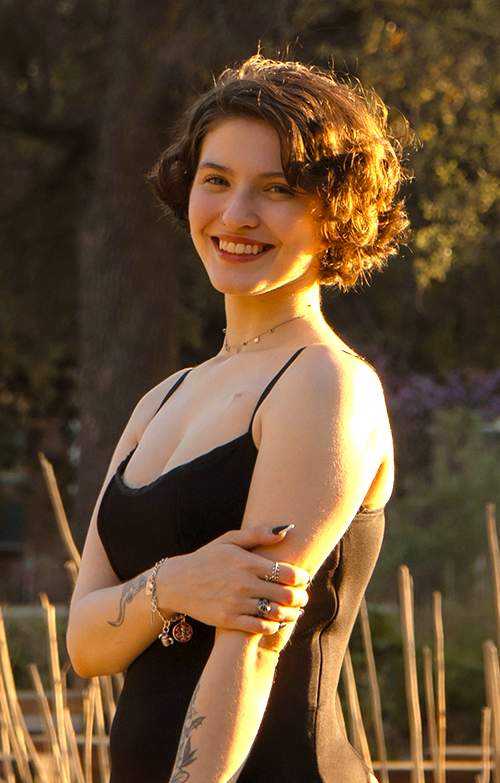
B.S. Information Science, Health Informatics
Kai’s path to graduation is one of courage, community, and conviction. She will walk
across the stage this May—a moment many once said would never come.
That skepticism began early. High school advisors discouraged Kai from applying to
college, citing grades and the severity of a chronic condition. Doctors echoed those
doubts. Undeterred, Kai applied anyway—without telling anyone and without help. When
the acceptance from UNT arrived, Kai made a bold decision: to move five hours from
home, freshly post-operation and certain of one thing—this was just the beginning.
It wasn’t an easy start. Kai’s condition worsened throughout undergraduate studies,
leading to failed courses, medical incompletes, and moments of serious doubt. A pivotal
conversation with best friend Giovanna Kirschner—who stood by Kai through late-night
study sessions and ER visits alike—became a turning point. Kai reconnected with UNT’s
support team, who responded immediately. With new accommodations in place, Kai turned
things around, earning induction into Delta Alpha Pi, an honor society for high-achieving
students with disabilities. Kai also made the Dean’s List three times and was most
recently named to the President’s List.
Kai’s impact at UNT extended far beyond academics. As a founding member of the University
Programming Council’s Education and Awareness Committee, Kai helped launch Chronically
Chill—an event designed to bring together chronically ill and disabled students, creating
space for connection with peers and UNT staff who shared similar experiences. Many
attendees approached Kai with tears in their eyes, grateful simply to feel seen and
understood.
“It was the beginning of my advocacy on campus,” Kai said, “and when I realized there
was a serious need for these types of events.”
When the College of Information launched its first student ambassador program, Kai
saw another opportunity. Being a visible and present representative—someone who reflected
students who had been told they didn’t belong—was a responsibility Kai embraced fully.
Representation, Kai says, has been the honor of a lifetime.
Kai also credits UNT’s Survivor Advocate Office with making it possible to remain
enrolled after experiencing a crime during the third year of study. The office’s support,
resources, and advocacy provided a safe path forward.
“UNT’s faculty and staff are a garden,” Kai said. “They all deserve their flowers
for fighting for every student’s success.”
This fall, Kai will continue at UNT's Toulouse Graduate School as a master's candidate
in Information Science—on track to become part of the three percent of students with
disabilities who earn a graduate degree. The goal is to bring a patient's perspective
to improving healthcare access.
Kai's advice to students who share a similar background is straightforward: "Advocate
for yourself. You deserve to take up space as much as anybody else."
Sai Donepudi
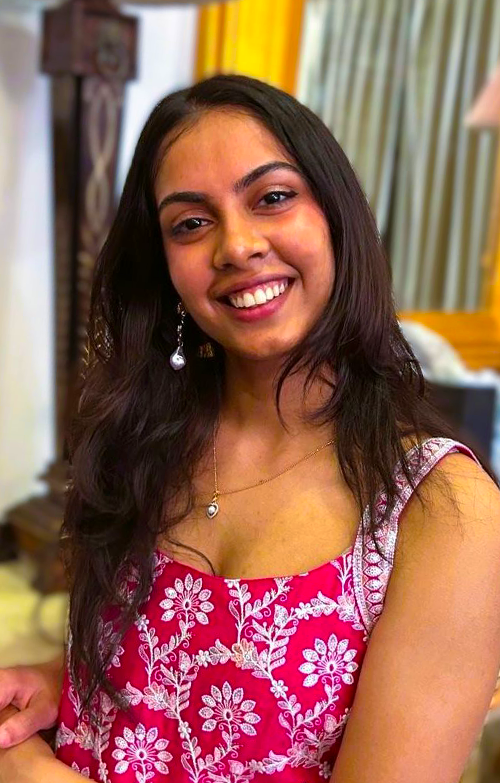
B.S. Data Science
Sai began her academic journey at Collin College, where she earned an Associate of
Science in Computer Science. Starting at a community college, she says, was one of
the best decisions she made—it gave her a strong technical foundation and kept her
motivated to keep growing. By the time she transferred to UNT, she was already working
professionally.
At UNT, she joined the Data Science Organization, serving first as treasurer before
becoming president—gaining hands-on experience in leadership, community building,
and bringing people together around a shared purpose. In the I.D.E.A Lab (Intelligent
Data Engineering and Analytics Lab), she worked as an undergraduate research assistant
on a project using large language models to build a knowledge taxonomy from peer-reviewed
dental research, combining AI-driven analysis with expert human evaluation.
That work opened another door: she was selected to participate in an NSF-funded international
research project this summer at the IMDEA Networks Institute in Madrid, Spain, focusing
on wireless networking, edge computing, and machine learning.
She was also awarded the Satish and Yasmin Gupta Endowed Scholarship, a merit-based
award recognizing academic excellence and leadership in data science.
On the professional side, Sai has been building healthcare data infrastructure as
a data engineer at SEES Group—applying what she has learned at UNT in a high-stakes,
real-world environment. "That work has shown me how much impact well-engineered data
systems can have on people's lives," she said.
Dr. Chen, Dr. Ding, and Dean Kinshuk each played a significant role in her development
at UNT, and Sai is direct about what their support meant. "They invested in me, and
that means everything."
Looking ahead, she plans to continue working at the intersection of AI, quantum computing,
and data engineering in high-impact domains. She also hopes to give back to the next
generation of students in the same way others have supported her.
Her advice to incoming students: "Start before you feel ready. Don't underestimate
the value of a community college path. And find people who push you—the people around
you shape your trajectory more than you realize."
Merrion Dale Frederick

Ph.D. Information Science, Archival Studies
Merrion will defend her dissertation this June, completing a Ph.D. in Information
Science with a focus on archival studies. Her path—spanning international studies,
linguistics, and community-based research—has been anything but linear, and that is
exactly what shaped her work.
While earning her master’s in linguistics at UNT, Merrion taught ESL and mentored
refugee youth in Dallas, experiencing language as both academic inquiry and lived
reality. That dual perspective led her to archival studies through the CoRSAL project
and the mentorship of Dr. Shobhana Chelliah, where she began working with under-resourced
language communities to build digital archives that reflect their needs and priorities.
That work grew into the Our Refugee Stories Archive (ORSA), where Merrion now serves
as co-director. Built through sustained relationships with refugees and resettlement
workers, ORSA reflects her commitment to community-centered archiving—where questions
of ownership, access, and representation are central.
Her research has earned national recognition, including the Society of American Archivists’
Theodore Calvin Pease Award, and publications in leading journals such as American
Archivist and the Journal of Education for Library and Information Science.
Merrion is candid about the challenges of her journey, from navigating ADHD in a research-intensive
program to building intellectual community across disciplines. Mentorship played a
critical role, particularly from Dr. Ana Roeschley, along with Drs. Shobhana Chelliah,
Oksana Zavalina, and Brian O’Connor.
Beyond academia, she is co-founder and project manager of Perpetua Archival Consulting,
leading archival projects for institutions and community organizations grounded in
the same principles that define her research.
Her advice to students: "Trust yourself. Pay attention to the questions that won’t
leave you alone and follow them—even when they don’t fit neatly into a single field.
Build relationships with communities before you need them for your research. The work
will be stronger for it—and so will you."
Baby Jahnavi Kovelamudi

M.S. Data Science
Jahnavi’s path into data science grew directly from her professional background in
software development. Working in industry taught her that applications provide the
interface, but the real value of the digital era lies in the data beneath them. She
came to UNT's College of Information to close the gap between building software and
understanding the insights data can offer—to move from implementation to meaning.
That first semester was quiet. Jahnavi describes herself then as a silent observer,
navigating the isolation of being away from home and family for the first time. A
one-on-one conversation with Dean Kinshuk changed the trajectory of her time at UNT.
He encouraged her to join the COI Student Ambassador program, and what had been isolation
became community and purpose.
Jahnavi was a founding team member of the Society for Student AI Innovation (SSAI),
which earned New Student Organization of the Year, and served as its general secretary.
She co-founded Women in Data Science and served as its vice president, and she was
treasurer for Women in Computing. She also received a Certificate of Student Leadership
from UNT's College of Engineering for her dedication to advancing women in the field.
Her achievements extend beyond leadership roles. She placed third at the GSC HackWell
2025 Hackathon and presented her clinical AI project, CareLens, at the TMC AI Summit,
the THIA Conference, and UNT Research Day. She was also nominated for the UNT Student
Employee Marvelous Multitasker Award and for Graduate Student Officer of the Year
at the 2026 Eagle Awards.
Her professional work at UNT Facilities became another arena for meaningful impact.
Under the guidance of capital planner Sharon Kirkpatrick and data analyst Michelle
Patnett, Jahnavi was trusted with critical reports and multi-year planning projects—work
that gave her the autonomy to apply her analytical skills to university-wide challenges
and grow from student to working professional.
The mentorship she received from faculty shaped her development as both a technical
expert and a leader. "The culture of mentorship at UNT," she says, "provided a foundation
that balanced academic rigor with professional growth."
Looking ahead, Jahnavi plans to lead initiatives that prioritize data integrity and
ethical AI—ensuring that technology serves as a transparent and reliable tool for
human decision-making. The analytical and governance frameworks she developed at UNT
are the foundation she intends to build on.
Her advice to incoming students, especially those taking the same leap she did: "Don't
remain a silent observer. Seek out mentors early. Your unique perspective is a gift
to the university—by finding your voice, you not only enrich your own education but
also pave the way for those who follow you."
Johannas Meela Katikala
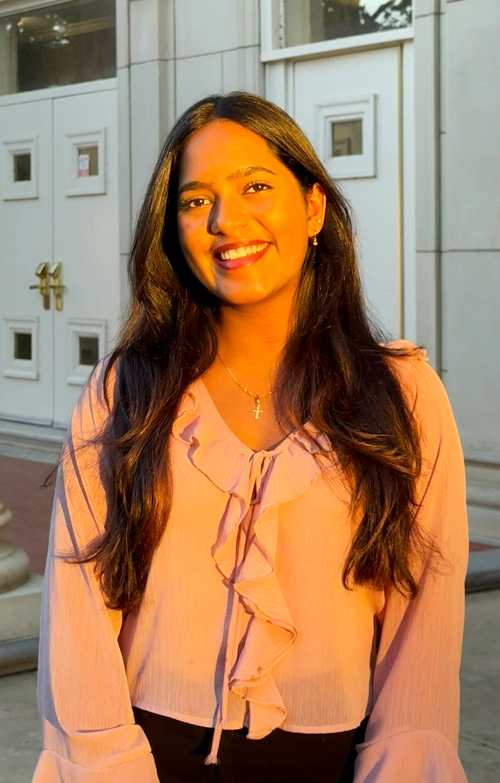
M.S. Data Science
Johannas packed her entire life into two suitcases and moved across the world. The
dream was bigger than the fear—and that was enough.
Johannas came to the United States shaped by the example of her parents—her father,
a full-time Christian missionary, and her mother, a high school teacher. Their lives,
she says, were simple but defined by showing up and making a difference. That lesson
became the foundation for everything that followed.
The early months at UNT were difficult. Navigating a new country, a new culture, and
a new academic system—alone, for the first time—tested every part of her. She faced
rejection after rejection in her search for on-campus work, spending months in the
library each day researching and applying until she finally secured a position. That
persistence eventually led her into research.
At UNT’s DVXR Lab, Johannas served as a group leader and published research on two
respected platforms, IEEE and ERVR-188, focusing on improving mental health outcomes
through virtual reality. She also mentored students from the Texas Academy of Mathematics
and Science (TAMS), guiding some of the brightest young minds she had encountered
as they explored converting thought into text using EEG signals. The experience, she
says, was among the most humbling of her academic life.
Johannas was awarded the Vikas Sinha Scholarship during her time at UNT and is currently
interning with the City of Lewisville, where her fleet analysis work—using vehicle
lifecycle prediction modeling—has the potential to generate up to $1 million in savings.
She credits Dr. Sharad Sharma, the professor of her very first UNT lecture, with shaping
her trajectory. “Working under his guidance, I did not just learn data science and
VR—I learned how to think, how to lead, and how to take on work that matters.”
What grounds Johannas is the moment she realized she had proved something to herself.
“A kid from a simple home, from halfway across the world, with nothing but faith inside,
could make it,” she said. “All it takes is one leap.”
Looking ahead, Johannas plans to work as a data consultant, helping organizations
make smarter decisions by translating complex data into clear, actionable insights.
She hopes to spend her career showing people that data is empowering.
Her advice to incoming students is something she learned the hard way: “You do not
have to arrive as an expert. You just have to show up every single day. That is where
everything begins.”
Sri Ramya Katukuri
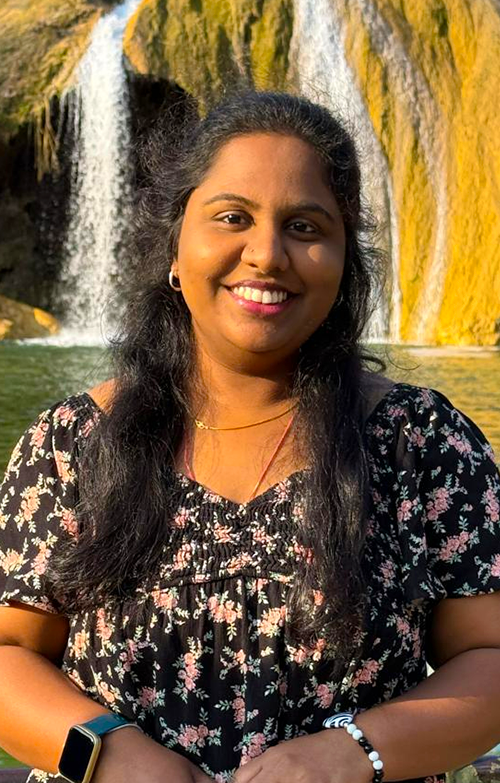
M.S. Data Science
Born and raised in India, Ramya earned her bachelor's degree in engineering and gained
professional experience in client support before deciding to pursue graduate study
in the United States. The move was bold, and the adjustment was real—a new country,
a new academic system, and the challenge of building a support network from scratch.
Through it all, she stayed grounded by returning to her reasons for starting.
"I am most proud of the fact that I never just attended UNT," she said. "I participated
in it—fully and wholeheartedly."
At UNT, Ramya has served as a COI Student Ambassador since her very first semester,
representing the college at events, building connections, and growing in ways she
hadn’t anticipated when she arrived. She also worked as a Student Assistant in Retail
Catering Services, where she developed skills in event management and hospitality—experience
she now considers genuinely valuable.
Ramya gives particular credit to the COI Student Ambassador team and to Dean Kinshuk
for the impact they’ve had on her experience. The ambassador community welcomed her
from day one and provided a sense of belonging that made UNT feel like home.
Her engineering background made data science a natural evolution of her skills. The
program gave her a framework for transforming complex information into meaningful
insights—work she plans to continue in roles that bring together technical analysis
and human-centered problem-solving.
After graduation, Ramya hopes to work in industry and research, using data to drive
decisions and make a meaningful difference. She carries with her the analytical foundation
built through her coursework, alongside a broader perspective shaped by years of working
directly with people.
For students arriving with a similar background, her advice is to get involved from
the very beginning: "Every event you attend, every person you meet, and every challenge
you face is shaping you. Step out of your comfort zone from day one—the classroom
is just one part of your education."
Sai Shivani Parimi
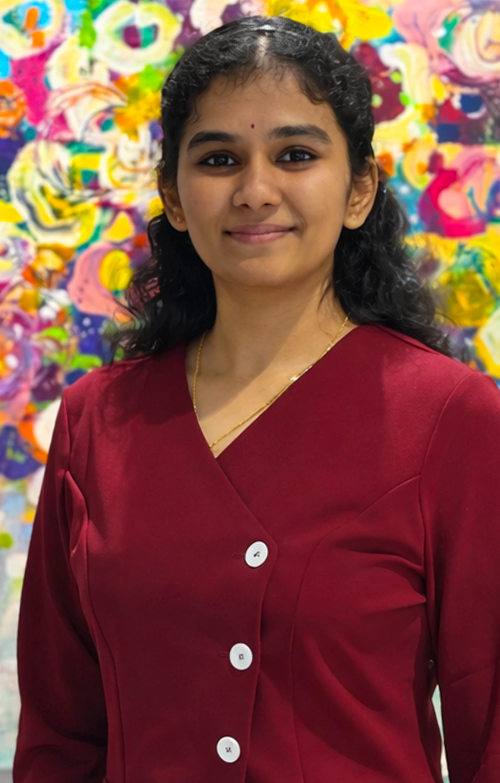
M.S. Health Informatics
Shivani spent years in clinical practice before coming to UNT. As a dentist in India—including
during the demands of the COVID-19 period—she witnessed firsthand how much patient
care depends on timely, organized, and accessible information. That observation became
a question she couldn’t let go of: what would it mean to improve healthcare at a systems
level?
That question brought her to UNT's College of Information. The transition from dentistry
to data was significant. It meant moving to a new country as an international student,
learning technical skills like data analytics and programming from the ground up,
and stepping into an academic environment that was unfamiliar in nearly every way.
For Shivani, the decision to pursue graduate education abroad carried weight well
beyond her own ambitions. As an only child, she holds a deep sense of responsibility
toward her family—one that has been a steady source of motivation throughout her journey.
She immersed herself in the UNT community, serving two semesters as a Graduate Service
Assistant and taking on active roles in the Health Informatics Student Organization
(HISO) and the Library and Information Science Student Association (LISSA). She also
served as a College of Information Student Ambassador. In recognition of her academic
performance and commitment, she was awarded two scholarships—one from the Health Informatics
department and one at the university level.
"Transitioning from a clinical background into a technology-driven field," she said,
"required consistent effort, self-learning, and the willingness to take on challenges.
Over time, those challenges became opportunities for growth."
Shivani credits her parents above all, along with her own determination and the support
of UNT's faculty, peers, and student organizations, for making her success possible.
The combination of family support, personal drive, and the community she found at
UNT shaped her experience.
Looking ahead, she hopes to work at the intersection of clinical understanding and
health technology—building systems and tools that support better decision-making for
healthcare providers and, by extension, better outcomes for patients and communities.
Her advice to students arriving from a similar background is direct: "Your background
is not a limitation—it's your strength. Use it to bring a unique perspective and create
your own path forward. And be patient with yourself. Those moments of doubt are part
of the journey."
Sai Neha Penmetsa
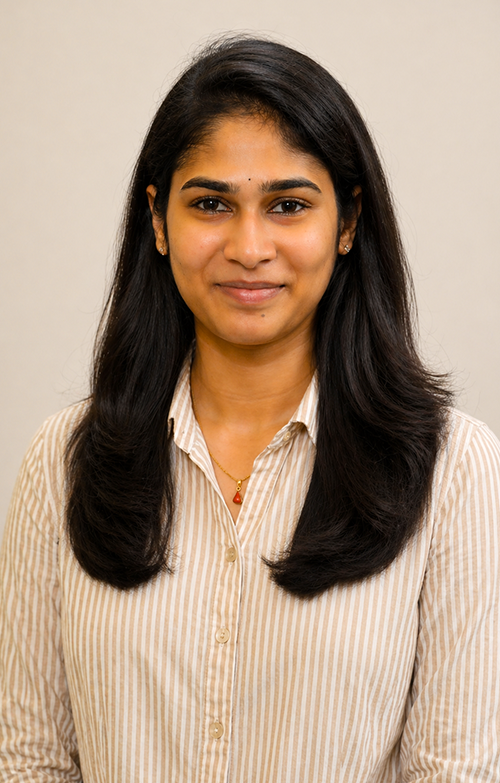
M.S. Learning Technologies
Sai Neha has wanted to be a teacher for as long as she can remember. What has changed
over time is her understanding of what teaching can look like.
Sai Neha entered the program with a clear purpose: to find the intersection between
her love of education and her belief that technology can make learning more accessible
and engaging for students everywhere—particularly in India.
That dual passion led her to work as a Research Assistant under Dr. Deborah Cockerham,
where she gained hands-on experience in academic research that extended well beyond
classroom theory. She also served as a Research Data Analyst for the MeSpace Hollman
Project, strengthening her analytical skills and deepening her understanding of how
research can create tangible change in educational settings.
Dr. Cockerham, Sai Neha says, had the most significant impact on her time at UNT.
“From my initial days, she supported and guided me in both academics and research.
Her encouragement gave me confidence, and her mentorship helped me believe in my own
potential.”
Coming from India to pursue a graduate degree in the United States was not something
Sai Neha had always imagined for herself. Adjusting to a new country, a different
academic culture, and the everyday demands of graduate school while building a life
abroad required patience and focus. The consistent support of her husband, Sasank
Varma Sarpella, was a steady source of strength throughout.
“Moving to a new country and managing responsibilities at home along with my studies
was not always easy,” she said. “I learned to stay organized, manage my time well,
and remind myself why I started this journey.”
Now, as she prepares to graduate, Sai Neha has her sights set on a career as a Research
and Development Analyst in educational technology. She hopes to build on the skills
she developed at UNT—in research, data analysis, and learning technologies—to create
solutions that make education more effective and accessible for students.
Her advice to students arriving from a similar background reflects the journey she
has completed: “Believe in yourself, even when things feel uncertain. Growth happens
outside your comfort zone. Stay patient with yourself and trust the process.”