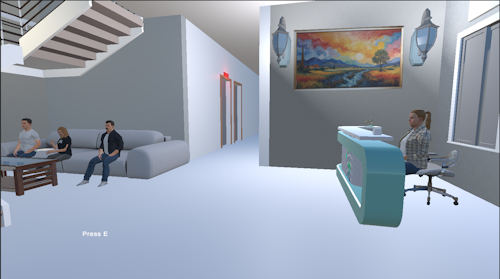
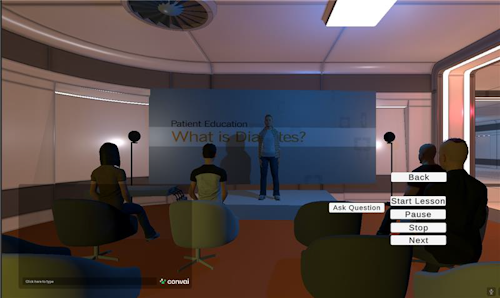
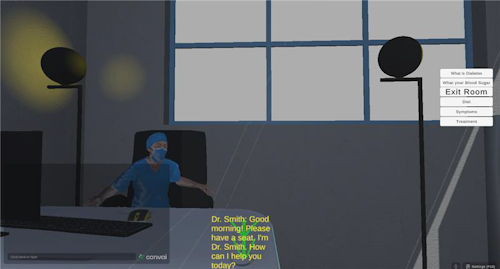
This work presents VR-DiabEdu, an immersive virtual reality system built in Unity
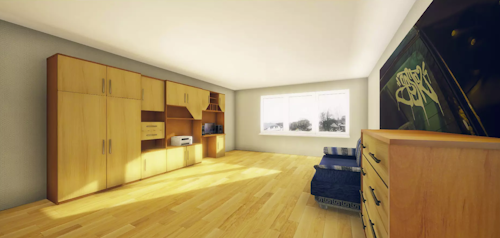
3D for diabetes patient education. Users explore a city environment, navigate a hospital
with a waiting area, reception desk, and doctor’s consultation room, and complete
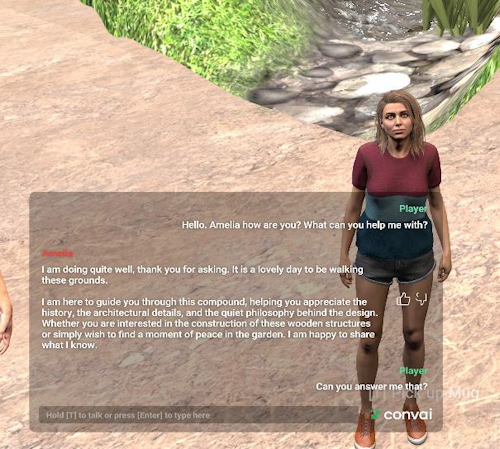
four interactive learning modes in a dedicated training room. Two Convai-powered AI
characters handle natural-language conversation about blood glucose, diet, symptoms,
and treatment. The system demonstrates how VR can turn passive health education into
an active, decision-driven experience. VR-DiabEdu is a Unity 3D system that combines
a coherent hospital environment, Convai-powered conversational AI characters, and
four activity-based learning modes. The learner can walk into a hospital, talk with
a virtual doctor, build a meal under a glycemic-index (GI) target, and classify foods
by GI category, all within a single VR experience
Project 2: Interactive Emergency First Aid Response Training Simulation
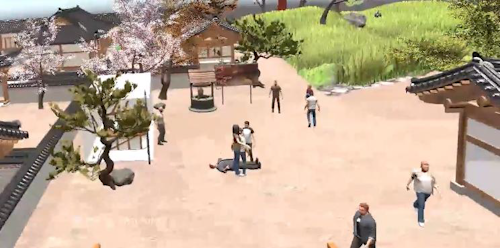
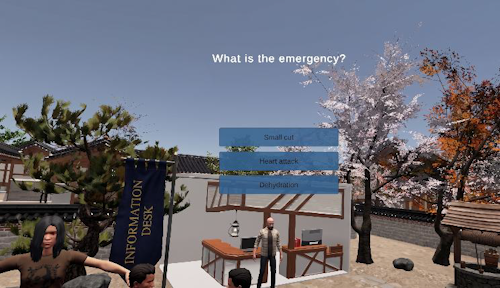
This project presented the design and implementation of an immersive Virtual Reality
(VR) emergency first aid training simulation developed in Unity 3D and situated within
a Japanese/Korean-style heritage environment. The system operationalized three clinically
relevant emergency scenarios, minor laceration management, cardiac arrest response,
and dehydration treatment, through a quiz-driven interaction framework aligned with
established first aid protocols and evidence-based instructional design principles.
The application demonstrates the potential of VR as an effective medium for scalable
and accessible emergency preparedness training. By leveraging first-person immersion,
interactive scenario engagement, and gamified feedback mechanisms, the system facilitates
active learning, reinforces correct response behaviors, and enables repeatable, consequence-free
practice without reliance on physical infrastructure or certified instructors. The
proposed approach is particularly relevant for students in health related disciplines,
corporate trainees, and the general public, offering a practical pathway toward improved
emergency response confidence, enhanced decision making under simulated pressure,
and broader access to standardized first aid education.
Project 3:Real-Time Workout Monitoring & Digital Twin Avatar System(Project Report) Students: S M Saiful Islam Badhon
Personal trainers, physical therapists, and fitness experts have historically found
it difficult to track exercise technique in real time. The most popular approach,
visual inspection by a human observer, is error-prone, subjective, and restricted
to a single viewing angle. This is particularly troublesome in virtual contexts, when
the therapist or trainer cannot physically view the user from every angle, and in
gym settings, where one trainer may oversee numerous clients at once. There is no
objective way for a trainer seeing a client remotely or standing across the room to
measure joint-angle variations or consistently assess the quality of each repeat.
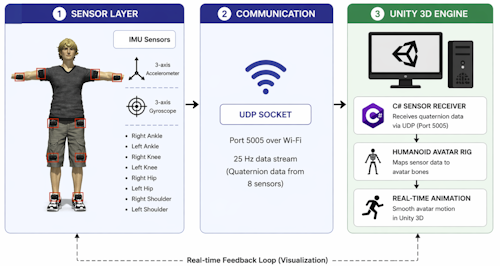
By creating an IMU (Inertial Measurement Unit)-based real-time exercise monitoring
system with a 3D digital twin avatar generated in Unity 3D, this project fills that
gap. A Unity client receives motion data at 25 Hz via a UDP socket from ten IMU sensors
that are affixed to key anatomical locations, such as the ankle, knee, hip, shoulder,
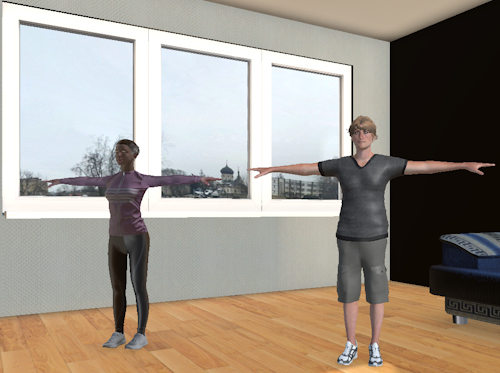
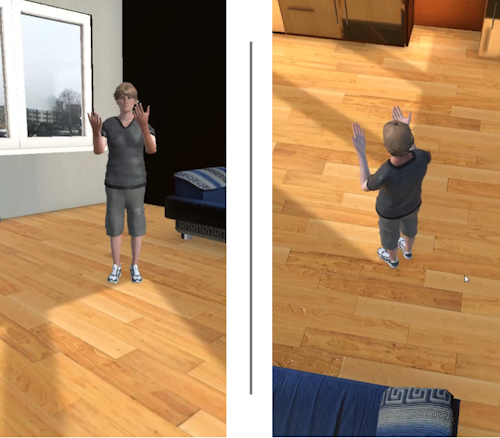
and forearm. Without using pre-recorded animation keyframes, the Unity program uses
the user’s movements to animate a Mixamo humanoid avatar (Remy/Jody) in real time.
Trainers can watch the avatar in any 360-degree view, freeze it, and replay it for
the last repetition. A computer vision module that was constructed concurrently with
the IMUs to compare using MediaPipe.
Diabetes is a chronic health condition affecting 40.1 million people in United States
[5]. Being diagnosed with diabetes can be overwhelming and confusing. Diabetes distress
is an emotional burden caused by living with diabetes and constant effort in self-management
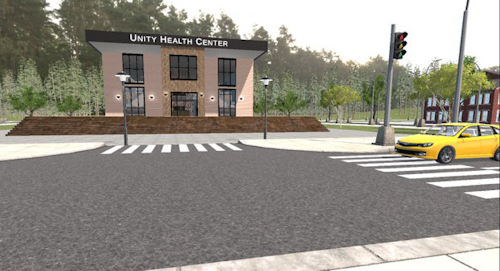
of the condition. This project “VR learning Tool for Diabetes Distress” presents an
immersive virtual environment to facilitate self-access Diabetes Distress Screening
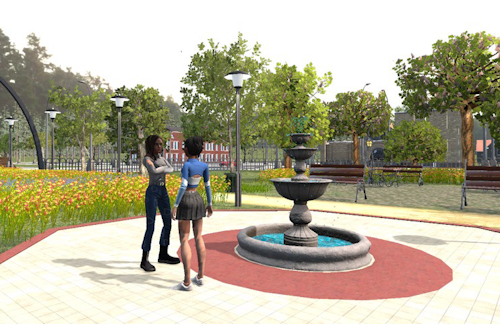
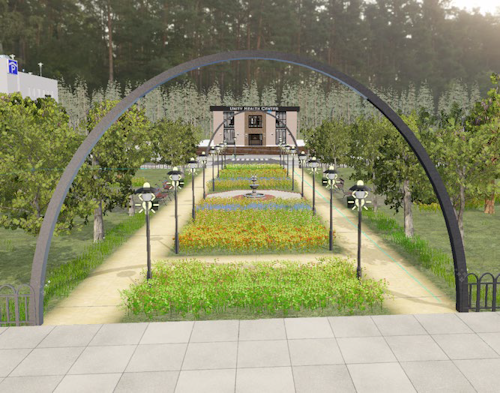
using the DDS17 framework. This application combines calming garden settings with
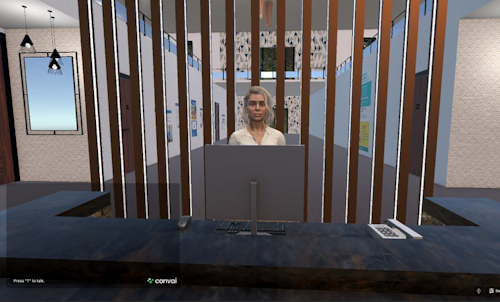
a fully equipped virtual health center with educational posters and video displays
covering all four domains of diabetes distress with AI powered coach built using ConvAI,
capable of answering questions in real time. Developed in Unity, this application
delivers engaging first-person experience in reducing stigma and improving accessibility
of diabetes screening and patient education for diabetes self-management for adults
affected with diabetes distress.
Project 5: VR Smart Gardens & Farm Simulation
Students: Ayesha Siddiqui, Hoang Tran, Keith Washington (Project Report)
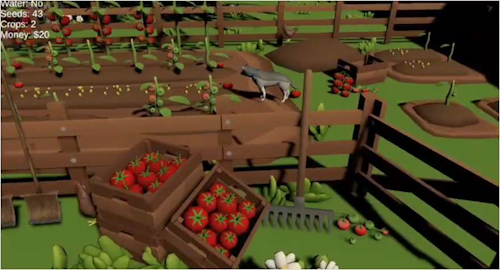
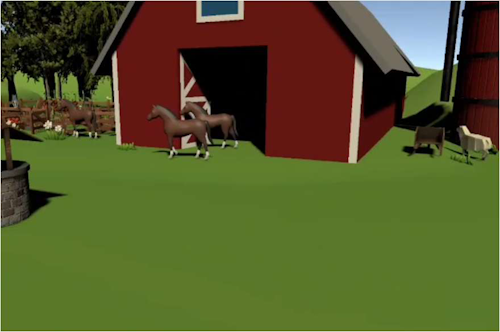
This project presents the VR Smart Garden & Farm Simulator, an immersive virtual reality
application developed using Unity that allows users to explore and interact with a
simulated farming environment. The application features garden plots, farm animals,
interactive tools, and sensor-based events including proximity, time, and touch triggers.
Users can perform farming activities such as planting, watering, harvesting crops,
and interacting with AI-controlled animals. The target audience includes students,
educators, and individuals interested in agriculture or VR experiences. This work
demonstrates how VR technology can provide accessible, risk-free, and engaging agricultural
education, addressing the gap between theoretical knowledge and practical application.
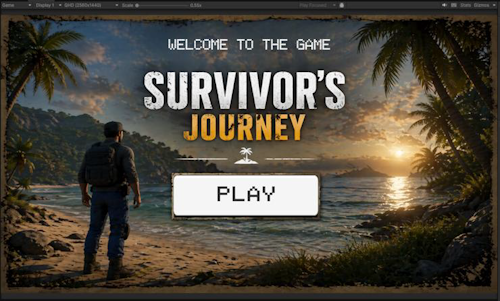
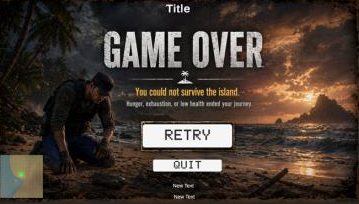
This project presents the design, architecture, and implementation of Survivor's Journey,
a 3D single-player survival game developed in Unity 6 using the Universal Render Pipeline
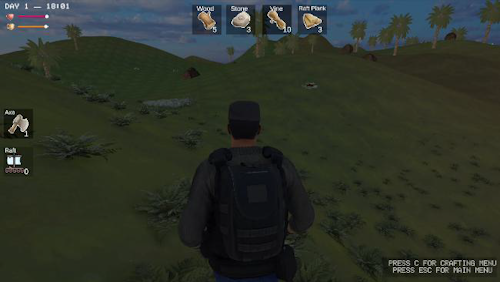
(URP). The game places the player as the sole survivor on an uncharted island, tasked
with gathering resources, crafting tools, and building a raft to escape. The project
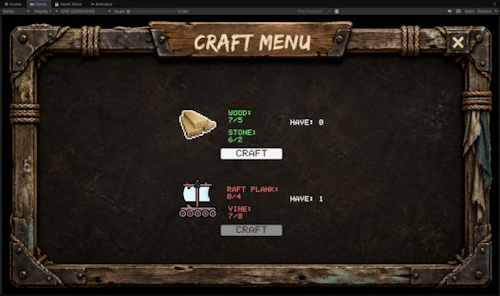
details the core systems developed, including survival mechanics, inventory management,
a crafting pipeline, dynamic day/night cycling, resource interaction with animation,
and a layered UI architecture. Key engineering challenges such as Unity Input System
integration, event-driven UI updates, Scriptable Object-based data design, and game
state management are discussed. The result is a complete, playable prototype demonstrating
interconnected game systems built with modular, extensible C# architecture.
 University of North Texas